VW Intake Valve Carbon Buildup
Something has changed under the bonnet of your VW Golf GTI, and the dashboard isn’t telling you about it.
The throttle response that once felt sharp has dulled. Cold starts feel rougher than they should. Overtakes that used to feel effortless now leave you waiting for power that arrives a beat too late.
None of this trips a warning light… None of it triggers a fault code on a routine scan… And because the change happens so gradually, most owners put it down to age or mileage rather than a specific cause.
There is a specific cause.
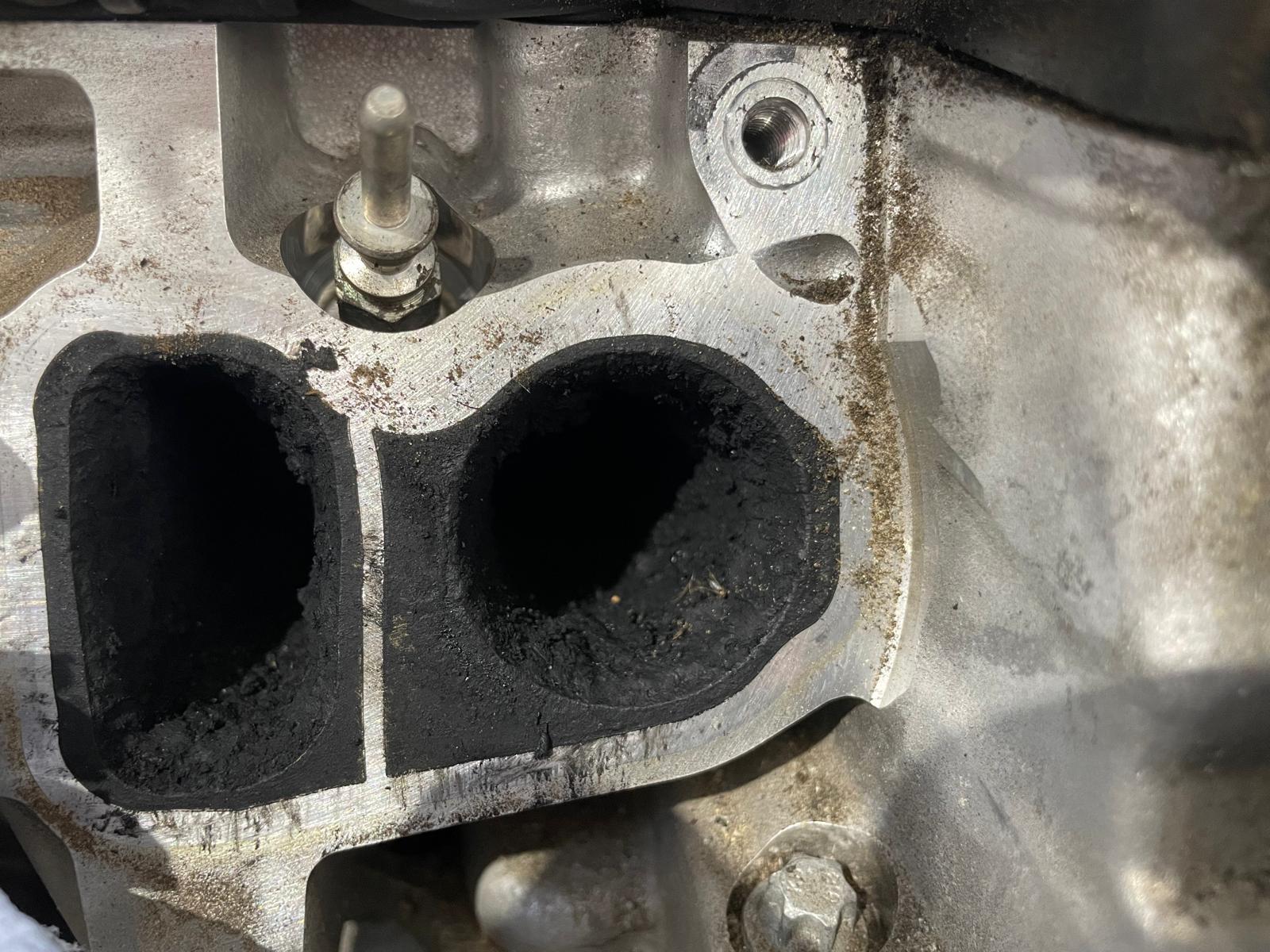
VW Golf and Tiguan models fitted with the 2.0 TSI direct injection engine can develop VW intake valve carbon buildup over time. Because fuel is injected directly into the cylinder, it bypasses the intake valves entirely. Oil vapour from the engine’s ventilation system coats those valve surfaces, hardens with heat, and progressively restricts the airflow your engine needs to perform.
So what’s actually happening inside your engine?
In this guide, we’ll explain why VW Golf GTI carbon buildup develops on TSI engines, what the symptoms feel like from behind the wheel, which models are most affected, and how the right specialist can clean it up and bring that edge back.
How Does Direct Injection Differ on a VW TSI Engine?
To make sense of why carbon collects on your intake valves, it helps to understand how fuel reaches the cylinders in the first place.
In older petrol engines, fuel was mixed with air in the intake manifold. As this mixture flowed into the cylinder, it passed directly over the intake valves. The detergent properties in the fuel acted as a cleaning agent, preventing residue from building up on the valve surfaces. No one designed it that way on purpose. It was a side effect of how those engines worked.
The TSI engine fitted to your VW takes a different approach. A high-pressure injector delivers fuel straight into the combustion chamber, bypassing the intake valves completely. VW engineered it this way for a reason.
That direct delivery gives the engine tighter control over how much fuel enters the cylinder and exactly when combustion happens. It’s a significant part of what makes your Golf GTI or Tiguan feel as responsive as it does.
The trade-off?
The intake valves no longer have fuel washing over them. Air still flows through the intake tract, but there is nothing to stop oil vapour from settling on those valve surfaces. Over tens of thousands of miles, that gap in protection starts to show.
What Leads to Carbon Deposits on VW TSI Intake Valves?
Every internal combustion engine generates a small amount of oil vapour during normal operation. The engine’s ventilation system directs that vapour back into the intake, where it gets drawn into the combustion process and burned off. On engines where fuel passes over the intake valves, this vapour has less chance to settle.
On a VW TSI engine, the fuel enters the cylinder directly. It never makes contact with the intake valves. So when oil vapour reaches the back of those valves, there is nothing to wash it away.
Here’s where it builds.
The engine’s heat bakes that residue into a hard, layered coating of carbon. It accumulates gradually, one layer at a time, across tens of thousands of miles.
As the coating thickens, it begins to narrow the gap through which air enters the cylinders. Reduced airflow leads to less effective combustion, and that’s when carbon buildup on the intake valves starts to change how your car drives.
Carbon deposits accumulating inside the intake ports can restrict airflow and affect engine performance
What VW Golf Carbon Buildup Symptoms Feel Like
The signs of VW intake valve carbon buildup appear gradually, not all at once. Because each change is small, it’s easy to dismiss them as normal ageing. If you’ve been wondering, ‘Why does my VW Golf run rough?’, carbon deposits on the intake valves are one of the more common explanations on TSI-engined models.
Here’s what to watch for:
- Rough idle: The engine doesn’t settle into a smooth rhythm on cold mornings. You may feel an uneven tremor through the steering wheel or pedals that wasn’t there before.
- Hesitation under acceleration: There’s a noticeable lag between pressing the throttle and the power arriving. It’s most apparent when pulling out of junctions or building speed on a dual carriageway.
- A loss of sharpness: Golf GTI and Golf R owners are likely to feel this first. The car that once reacted to every input now feels muted and less eager.
- Engine management warning light: If the deposits have restricted airflow enough to cause misfires or uneven combustion, the warning light may appear on the dashboard.
Not every owner will experience all of these, and other faults can produce similar signs. If something feels different, it’s worth having your vehicle assessed. Our team at RS Autotechnik, Dursley, can carry out a full technical evaluation to identify the cause.
Which VW Models Are Prone to Intake Valve Carbon Buildup?
The pattern is most closely associated with VW’s 2.0-litre TSI petrol engines, which rely on direct injection as standard. If you drive one of the following, your vehicle falls into this category:
- Golf GTI and Golf R (Mk7, 2013-2020)
- Golf GTI and Golf R (Mk8, 2020 onwards)
- Tiguan (2016 onwards with the 2.0 TSI)
All of these Volkswagen models use the same direct injection fuelling arrangement, which means the intake valves are exposed to the same amount of oil vapour without any fuel contact, keeping them clean.
Whether it’s VW Golf GTI carbon buildup on a Mk7 or Tiguan intake valve carbon buildup on a later model, the underlying cause and the remedy are identical.
This isn’t confined to VW. Direct injection carbon buildup is a widely reported pattern across many manufacturers.
What makes VW stand out is that TSI-powered cars are engineered for responsiveness. Golf GTI and Golf R owners buy the cars for their performance, so when that sharpness begins to fade, the change is felt sooner than it might be in a less performance-focused vehicle.
The good news? It’s well understood, and the team at RS Autotechnik has the experience and equipment to identify and address it.
How Is VW TSI Intake Valve Carbon Buildup Cleaned?
Chemical cleaners and fuel additives can’t reach the back of the intake valves, which is precisely where VW intake valve carbon buildup sits. The most effective way to address the buildup is through direct mechanical cleaning.
A common method of mechanical cleaning is walnut shell blasting.
This is where finely crushed walnut shells serve as a gentle abrasive, soft enough to preserve the valve surfaces when the process is carried out correctly, yet effective at breaking through the hardened carbon layer.
On the 2.0 TSI engine, the intake manifold must come off before a technician can reach the intake valves directly.
With the manifold out of the way, the technician directs compressed walnut-shell media onto each valve under controlled pressure. A vacuum extraction system collects the loosened carbon and spent material as the work progresses, preventing debris from entering the engine.
The job demands the correct tooling, a controlled workspace, and a technician who knows the TSI intake layout inside and out.
After the valves are cleaned, the technician refits the manifold with fresh gaskets and reassembles the engine. Many owners report a noticeable improvement in how the car responds, particularly in throttle sharpness and idle smoothness.
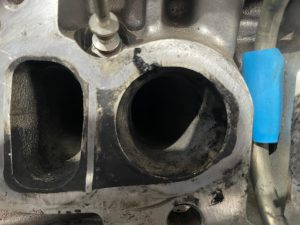
A closer look at the intake ports, showing less carbon buildup than in the heavily affected example
Whether you’re dealing with Tiguan intake valve carbon buildup or deposits on a Golf GTI or Golf R, the cleaning process follows the same approach.
Why Trust RS Autotechnik with VW Intake Valve Carbon Cleaning?
A routine service won’t flag VW intake valve carbon buildup. The deposits sit out of sight, and diagnosing them takes a thorough evaluation by a specialist who knows the TSI engine well. Removing them takes the correct tooling and a technician confident enough to strip and reseal the intake manifold properly. The specialist you choose matters.
At RS Autotechnik, Dursley, our team regularly works with VW owners on performance concerns affecting Golf GTI, Golf R, Tiguan, and other TSI-powered models. If carbon buildup is behind the change you’re feeling, we have what’s needed to put it right.
Here’s what you can expect when you choose RS Autotechnik:
- Experienced VW technicians: Our team works on TSI engines regularly and has carried out the intake valve cleaning process many times.
- Courtesy car: A courtesy car is provided while your vehicle is in our care.
- 12-month parts and labour guarantee: All work is backed by a full 12-month warranty covering both parts and labour.
- Transparent pricing: You’ll receive a clear breakdown of costs before any work begins.
Join {{review-count}} local customers across Dursley who have left us a {{average-rating}} Google rating for thorough workmanship, clear communication and honest pricing.
Speak to our team at RS Autotechnik on 01453 796345 to book your vehicle in for a full intake valve assessment.
Call Now 01453 796345Save on VW Servicing
Frequently Asked Questions About VW Carbon Buildup
Can fuel additives prevent carbon buildup on VW engines?
Additives marketed as carbon cleaners do a good job of maintaining injectors and the fuel system itself, but they never reach the intake valves on a direct-injection engine. The deposits form on valve surfaces that sit upstream of where fuel enters the cylinder. The only effective removal method is mechanical cleaning performed by a technician with the correct equipment.
How do I know if my VW Golf has carbon buildup?
The telltale signs include a rough or unsettled idle first thing in the morning, a noticeable lag when you press the accelerator, and a dullness to the throttle response that wasn’t there before. These are classic VW Golf carbon buildup symptoms. Because other faults can mimic these signs, the surest route to an answer is a full technical evaluation by a specialist who knows the TSI engine. If you’ve been wondering, ‘Why does my VW Golf run rough?’, that evaluation is where to start.
How much does VW intake valve carbon cleaning cost?
Every vehicle is different, so the cost depends on the severity of the deposits and the labour involved. Our team at RS Autotechnik, Dursley, is the smart alternative to the main VW dealer. Call us on 01453 796345, and we’ll explain what the work involves and provide a clear price before anything starts.
How often does VW intake valve carbon buildup need cleaning?
No manufacturer sets a fixed interval for this work because the rate of buildup varies with driving style, journey type, and service history. Some owners notice the first symptoms after tens of thousands of miles; others drive further before the change becomes apparent. If your engine’s performance feels different from what you’re used to, a specialist assessment is the best way to find out what’s going on.