Diesel Particulate Filter Explained
DPF… A term with a habit of appearing when you least expect it. Perhaps on a repair bill or a service report, or as a dashboard warning light that took you by surprise.
Most owners of a modern diesel-engined car are aware that their car carries a diesel particulate filter (DPF), but far fewer could explain what it does. You’ve probably asked yourself questions like: How does it clean itself? What can go wrong?
Your exhaust carries a diesel particulate filter (DPF) that helps trap particulate matter (soot) before it escapes. Regeneration burns away trapped soot, but needs the engine and exhaust system to reach and hold suitable operating temperatures. Short journeys are the most common reason it doesn’t complete, though faults can prevent it; without regular regeneration, the filter becomes increasingly restricted.
However, your vehicle’s DPF doesn’t work in isolation. It forms part of your car’s diesel emissions system, so we’ll cover them briefly too, to give you a fuller picture.
Why bring them up? Because they affect how much soot ends up in the filter, and their warnings can look deceptively similar to DPF trouble.
Throughout this expert guide, you’ll uncover what your diesel particulate filter does, why every journey you take affects it, and the habits that help keep it working as intended.
What Your Car’s Diesel Particulate Filter Is For
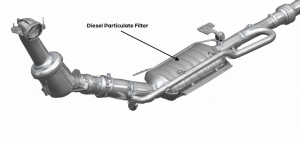
The DPF sits within the exhaust system, where it captures soot before it leaves the vehicle
If your diesel was sold in the UK after around 2009, it most likely came with a diesel particulate filter as standard. Euro 5 emissions rules made the filter effectively necessary, and its place is in the exhaust, helping trap soot from the engine before it leaves your car and enters the atmosphere.
A working filter steadily collects soot, and left unchecked, that build-up can restrict it. The good news? Your DPF is designed to clean itself, burning trapped soot away at high temperature whenever the right conditions are in place.
This process, called regeneration, sits at the heart of everything else in this guide.
When Euro 6 standards arrived in September 2016, they set tighter limits on emissions of nitrogen oxide (NOx) and particulate matter for newly registered diesel cars.
Meeting them requires a combination of emissions-control systems on most modern diesel vehicles, and the DPF plays a key role by controlling particulate emissions. Since 2014, an MOT failure can result when there’s evidence of DPF removal, tampering, or emissions-related faults.
That’s the diesel particulate filter explained at the level of what and why. Now let’s discuss how your vehicle’s DPF works.
How Does a DPF Work? What Regeneration Does Inside Your Filter
A honeycomb-like structure runs through the DPF, which is usually ceramic, and captures soot as exhaust gases pass through. What makes the design so effective at catching soot is also what fills it up over time.
Your car’s answer to a restricted filter is regeneration: an automatic clean-out that runs when specific conditions are met.
There are usually two main forms of regeneration:
- Passive regeneration: Occurs naturally when exhaust temperatures remain high enough, for long enough, to burn away the soot that has gathered. Sustained driving tends to produce these conditions, and most drivers won’t notice anything at all.
- Active regeneration: The engine management system triggers it once soot in the DPF reaches a set threshold, lifting exhaust temperatures to the level regeneration requires via a range of engine management strategies. A subtle shift in engine note, or slightly higher fuel use, is what some drivers notice.
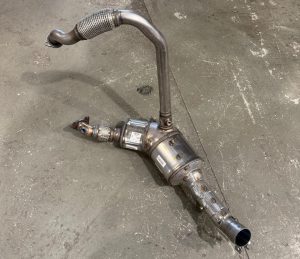
A removed DPF and exhaust assembly ready for inspection and servicing
One thing can undo all of this, though…
Switch off before the cycle finishes, and regeneration is interrupted; some soot may be left in the filter. Let that repeat: soot can keep accumulating; a DPF warning light may eventually appear, and performance can be restricted, such as in limp mode.
So, how does a DPF work day to day?
Two main regeneration methods, each requiring the vehicle to reach the correct operating conditions and maintain them while soot burns away. That’s the diesel particulate filter explained, in action, and it’s the reason longer regular journeys can be so beneficial.
Long Drives, Healthy Filter: The Link Every Diesel Owner Should Know
So, “Why does my diesel car need long journeys?” It’s a question every diesel owner eventually asks.
The short answer?
Regeneration needs time and the right conditions for it to work effectively, and short trips offer little of either.
School runs, stop-start town driving, and short everyday trips can deny the exhaust system the chance to reach the conditions regeneration needs, let alone hold them to completion. Cut the cycle short repeatedly, and soot can keep accumulating until warnings follow.
Specific temperature and operating conditions are what your vehicle’s DPF was built around, and longer, continuous journeys are where they’re more likely to be achieved.
If a DPF warning light has already appeared, it’s worth having the filter assessed.
Our experts at RS Autotechnik, Dursley, can advise on the next steps on 01453 796345.
How Other Emissions Systems Can Affect Your DPF
Your car’s DPF is just one part of the diesel emissions system. There are other parts that can affect how it works and the issues it might have.
The Exhaust Gas Recirculation (EGR) valve carries its own share of the emissions workload: it sends a portion of exhaust gas back into the engine, helping reduce harmful emissions.
Years of soot and oil vapour can coat the valve in carbon deposits, and a coated valve can become restricted, slow to respond, or even stuck.
So why does this matter for your DPF?
Depending on the nature of the fault, EGR trouble can increase soot production, adding extra strain to the DPF.
Registered after September 2016? Then your diesel vehicle is likely to have an AdBlue system on board as well.
So what is AdBlue, and why does it matter for your diesel emissions?
AdBlue is a fluid that gets injected into the exhaust system; its job is supporting the SCR (Selective Catalytic Reduction) catalyst as it converts nitrogen oxides into nitrogen and water vapour.
Your car monitors AdBlue fluid levels, warning you when it’s low. On some vehicles, an empty tank or a detected system fault can result in reduced performance or an engine that cannot restart, and because these symptoms can sometimes overlap with DPF warnings, an expert diagnosis may involve assessing both systems.
How Your Diesel Lets You Know the DPF Needs Attention
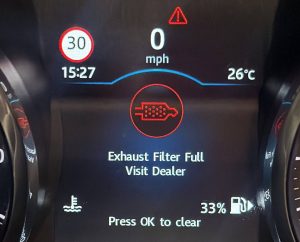
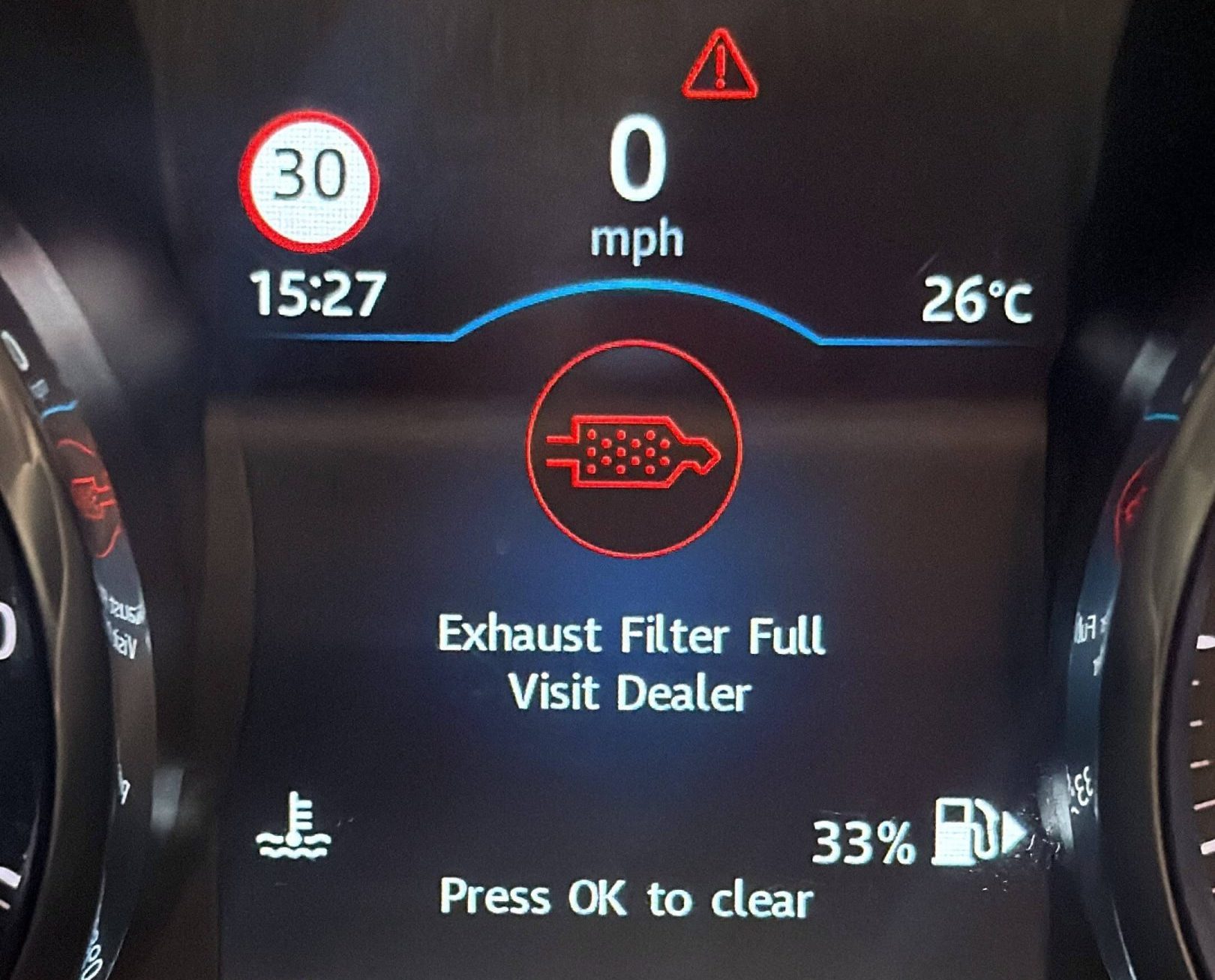
A DPF or exhaust-filter warning should be investigated rather than repeatedly ignored
Few DPF faults announce themselves clearly, but your car usually gives you clues:
- A DPF warning light on the dashboard: Soot buildup beyond normal levels can trigger this light, as can a fault in the DPF itself or in the systems that monitor and manage it.
- Limp mode or reduced power: If a fault affecting engine operation or emissions control is detected, the engine management system may reduce performance.
- Fuel consumption creeping up: Each interrupted attempt to burn away soot can use extra fuel, so repeated incomplete regeneration can push overall consumption up.
- Smoke or unusual smells from the exhaust: A strong smell, or smoke you can see, can point to trouble within the engine or emissions system; both call for investigation.
Sometimes these clues overlap, and not all of them point directly to the DPF. Modern vehicles run several systems alongside the filter, and that’s where specialist assessment comes in.
Noticed any of the above? Bring your diesel to our experts at RS Autotechnik, Dursley, for a thorough check of your DPF.
Looking After Your Diesel Particulate Filter Day to Day
You don’t need to understand the engineering to take good care of your car’s DPF. The important thing? A few driving habits, applied consistently:
- Build in longer journeys where you can: Sustained, uninterrupted driving gives the engine and exhaust system their best chance to reach the conditions regeneration needs, and to hold them long enough to burn away soot.
- Don’t ignore warning lights: Promptly investigating a DPF warning light is important; the longer diagnosis waits, the more chance the underlying issue has to worsen.
- Find an expert garage: The light might point to one component while the root cause lies elsewhere, so an expert assessment matters.
And that’s the diesel particulate filter explained, along with the habits that keep it healthy. Armed with this knowledge, you’re better placed to catch potential issues early.
Why Trust RS Autotechnik with Your DPF?
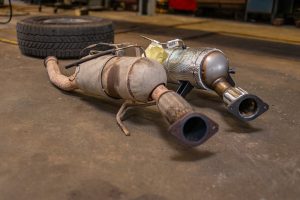
Depending on the fault and condition of the filter, DPF treatment may involve regeneration, cleaning or replacement
So that’s the diesel particulate filter explained. The one thing left is knowing where to turn when a warning appears.
DPF symptoms can be deceptive… What presents as a filter problem can begin elsewhere in the diesel emissions system, which is why an accurate diagnosis by an expert matters, and why the right garage and experts make the difference.
At RS Autotechnik, Dursley, our technicians work from experience first, with manufacturer-level technology and proven processes in support, to track down DPF and emissions-system faults accurately. Where the diagnosis calls for it, we can clean, regenerate, repair, or replace a DPF, working in accordance with the manufacturer’s repair guidance.
By choosing RS Autotechnik, you benefit from:
- Main-dealer technology and reference data, used by experienced technicians.
- A 12-month parts and labour guarantee on the work we carry out.
- A courtesy car is available to keep you moving while we work.
- Experts serving Dursley, Bristol, Tetbury, and Gloucester.
Join the {{review-count}} customers who’ve rated us {{average-rating}} stars on Google for expertise, clear communication, and excellent value.
Call 01453 796345 and book your DPF assessment at RS Autotechnik, Dursley, today.
Common DPF Questions, Answered
What is a diesel particulate filter and why does my car have one?
A diesel particulate filter (DPF) is fitted to the exhaust of your diesel vehicle, helping capture particulate matter (soot) and preventing it from reaching the atmosphere. It’s been a feature of most diesel cars sold in the UK since around 2009, and removal or tampering can result in an MOT failure.
So how does a DPF work? By cleaning itself through regeneration, trapped soot is burned away at high exhaust temperature when conditions allow. Usually, there are two main methods at play, passive and active. Passive regeneration relies on exhaust temperatures staying high enough to burn away accumulated soot; the engine management system starts active regeneration once soot loading hits a set threshold.
Why does my diesel car need long journeys to stay healthy?
Suitable exhaust temperatures are what let your DPF burn soot away, and longer, uninterrupted journeys at a steady speed give those temperatures the best chance of being held. Among the main reasons regeneration fails to complete are short journeys, though faults within the emissions system can stop it too.
How do I know if my DPF is blocked?
A DPF warning light is one of the most common signs of a blocked DPF. Reduced power, increased fuel consumption, or a change in how the engine runs can come with it.
That said, these signs aren’t proof that the DPF itself is at fault; other issues can cause the same symptoms, so it’s worth having your vehicle assessed. Our team at RS Autotechnik, Dursley, is on hand to investigate and advise.
Can a DPF be repaired, or does it need replacing?
Whether a DPF can be repaired or not depends on the condition of your vehicle’s DPF and the cause of the fault. Restoration without replacement is achievable in many cases. Our team at RS Autotechnik, Dursley, can assess yours and suggest the right approach.