BMW AC Compressor Failure
Last summer, your BMW’s air conditioning worked exactly the way it should. You pressed the button, cold air came through the vents, and you never gave it a second thought.
This summer?
The button does the same thing. The vents blow the same air. But there’s nothing cold about it…
The natural reaction is to try a regas. When it doesn’t work, the questions start. What’s actually gone wrong? Has it been failing for months? Can any garage handle it?
In many cases, the answer points to the AC compressor. The starting point is understanding what it does and how it connects to the engine.
That’s what this guide covers. We’re explaining BMW AC compressor failure in full and what to do about it. With the focus on the electromagnetic clutch type fitted to many BMW models, including the 3 Series, 5 Series, and X5 from around 2016 onwards.
If you’re not sure which type your BMW uses, a specialist can tell you.
The AC compressor in your BMW pressurises refrigerant to cool the cabin. An electromagnetic clutch connects the compressor to the engine’s belt. When the clutch wears out or develops an electrical fault, the compressor stops engaging, and the air conditioning blows warm. Engine bay noises when the AC is switched on are another common sign. This is specialist work for a qualified technician.
So what role does the compressor actually play?
What Your BMW’s AC Compressor Does and Why It Matters
Every blast of cold air from your BMW’s vents starts at one point: the compressor.
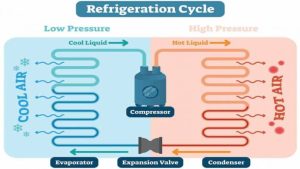
It sits within a closed loop of components that circulate refrigerant, and the compressor is what generates the force to keep that loop moving. Its function is to compress low-pressure refrigerant gas into high-pressure gas. That pressure change is what forces the refrigerant to flow through the rest of the circuit.
Once the compressor has done its work, the remaining components each handle a specific stage:
- Heat leaves the system through the condenser at the front of the vehicle, where the gas cools into liquid.
- A sharp drop in pressure follows as the refrigerant passes through the expansion valve.
- The evaporator then absorbs warmth from the cabin, and the resulting cool air is directed through your vents.
Without the compressor working, none of that can happen. There’s no refrigerant flow, no cooling, and the only thing coming from your vents is warm air.
BMW doesn’t use a single compressor design across its entire range. Some models are fitted with a variable displacement type that runs continuously and adjusts its output rather than cycling on and off.
Others use an electromagnetic clutch that physically engages and disengages the compressor from the engine’s auxiliary belt.
Not sure which type your BMW has? A specialist can confirm it.
Inside the Electromagnetic Clutch: How It Engages Your BMW’s Compressor
At the front of your BMW’s engine, the compressor sits alongside the auxiliary belt.
That belt powers a pulley on the outside of the compressor at all times while the engine runs. But at this stage, the compressor itself isn’t working. The pulley spins freely on its own bearing, disconnected from the compressor’s internal parts.
The electromagnetic clutch is the mechanism that joins them.
The moment your climate control calls for cold air, a signal is sent to the clutch coil. As the coil energises, its magnetic field draws the pressure plate firmly onto the rotating pulley surface.
The shaft and pulley engage as one, and the compressor starts pushing refrigerant through the circuit.
When cooling is no longer required, the coil switches off. The pressure plate releases, the compressor disengages, and the pulley carries on turning on its bearing. The whole assembly is ready to engage again the next time the AC calls for it.
This cycling is what gradually wears the clutch out.
Every engagement puts load on the electromagnetic coil, the pressure plate, and the pulley bearing. Over thousands of on-off cycles, those components accumulate wear. Any one of them can reach the point where it can no longer do its job, whether that means refusing to engage at all, slipping under load, or failing electrically.
So what does that failure look like for the driver?
Spotting the Warning Signs of BMW AC Compressor Failure
How BMW AC compressor failure presents itself depends on what’s specifically gone wrong. Some faults are completely quiet; others announce themselves the moment the AC switches on. Common patterns include:
- Warm air and nothing else: You select the AC, and the air from the vents stays at the same temperature. No noise, no warning light, nothing to point you in any direction. This can be a sign of a BMW AC compressor not engaging, usually because a clutch component has worn out or an electrical connection has been lost.
- A grinding or squealing noise from the engine: If a sound occurs when the air conditioning switches on and disappears when it’s turned off, that warrants attention. A worn bearing on the compressor pulley is one of the more common sources of BMW air conditioning compressor noise, and it’s likely to get progressively worse.
- Cooling that comes and goes: The air blows cold for a period, then drops off to warm, then returns to cold. This intermittent cooling can point to a clutch that engages but can’t hold under load. It’s likely to deteriorate over time rather than settle down.
These are common patterns of BMW AC compressor failure, but they aren’t the only possible explanation. Other faults within the air conditioning system can cause similar effects. A full technical evaluation is the only way to confirm the cause.
If your BMW air conditioning stopped working as it should, or you’ve noticed a BMW air conditioning compressor noise that wasn’t there before, it’s worth addressing. Get in touch with our team at RS Autotechnik, Dursley, and we can talk you through what’s involved.
Why Topping Up Refrigerant Won’t Fix a BMW AC Compressor Fault
The moment cold air disappears from a BMW, the natural assumption is that a regas will sort it. And in some cases, that’s all it takes. But if the compressor has failed or the electromagnetic clutch isn’t engaging, adding refrigerant won’t change anything.
There’s nothing to circulate it.
The compressor must be operational before a regas achieves anything. If the clutch isn’t engaging, the refrigerant doesn’t flow. If the compressor is running but damaged internally, the system can’t build sufficient pressure to cool the cabin. Either way, the refrigerant goes to waste.
And wasting it is more costly than it used to be.
The cost of wasted refrigerant makes this worse. BMW began using R1234yf refrigerant in 2016, and it costs significantly more than the older R134a gas. A regas that achieves nothing is money spent for no benefit.
What catches many BMW owners off guard is the seasonal aspect.
Compressor wear tends to accumulate slowly over time. During the cooler months, when cold air isn’t a priority, a deteriorating clutch or bearing goes completely unnoticed. It’s only when summer returns and the AC is expected to deliver that the fault reveals itself.
If you’ve had a regas and the air conditioning is still blowing warm, that’s a strong sign the problem lies elsewhere in the system. BMW AC compressor failure is one of the more common causes when a regas makes no improvement.
Why BMW AC Compressor Work Needs a Qualified Specialist

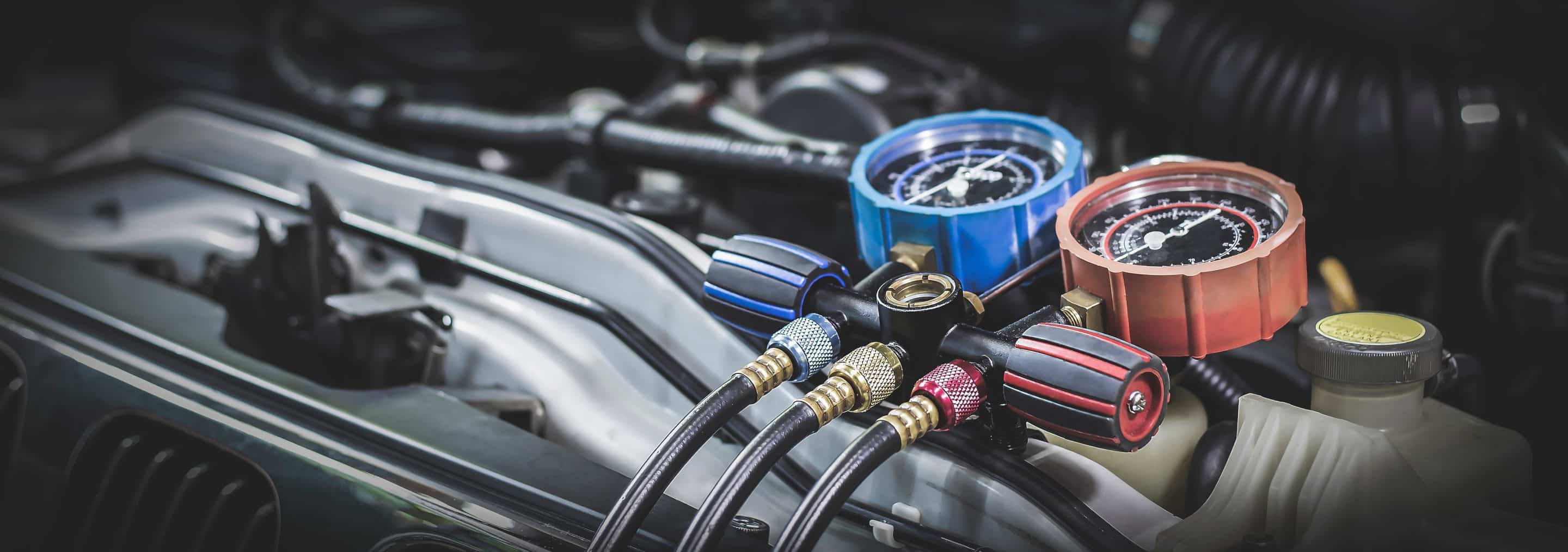
Any work on the refrigerant circuit of your BMW’s air conditioning is subject to legal regulation.
The technician carrying it out must hold the required refrigerant handling qualification, and the equipment used must meet defined standards. Not every garage has either.
The shift to R1234yf refrigerant in BMW models from 2016 also means the recovery and recharging equipment must be specific to that gas type. Older R134a machines are not compatible, and the fittings are deliberately different to prevent cross-contamination.
The refrigerant must be recharged to exact quantities. Getting this wrong doesn’t just leave you without cold air; it can cause further damage to the system.
When our technicians at RS Autotechnik, Dursley, carry out a BMW air conditioning assessment, the starting point is always a thorough technical evaluation. We identify what’s actually failed before suggesting any course of action.
Our team has the qualifications and correct tooling for your BMW’s refrigerant system. You’ll know what needs doing before anything goes ahead.
If your BMW air conditioning stopped working, or you hear a noise from the engine bay when you switch the AC on, call us on 01453 796345. We’ll give you an honest answer.
BMW Air Conditioning Repairs in Dursley: Why Choose RS Autotechnik?
When a BMW AC compressor fails, you need a garage with the qualifications, the correct tooling, and the practical experience to handle the job. At RS Autotechnik, Dursley, our technicians have all three.
Here’s why drivers across Bristol, Tetbury, and Gloucester choose RS Autotechnik for their BMW air conditioning work:
- Qualified technicians holding the required refrigerant handling certification for current BMW AC systems
- Access to dealer-level technical information and equipment for accurate fault identification and repair
- All work is backed by a 12-month parts and labour guarantee
- A courtesy car is available while your BMW is with us
- Transparent pricing; you’ll know what’s involved before any work starts
Join the other local Dursley drivers who’ve rated us {{average-rating}} across {{review-count}} reviews for thorough repairs, clear communication, and better value than the dealership.
If something’s changed with your BMW’s air conditioning and you’d like to know what’s behind it, give us a call on 01453 796345. We’ll talk you through it.
Your BMW AC Compressor Queries Answered
How can I tell if my BMW’s compressor has failed or if it just needs a regas?
If the compressor or its electromagnetic clutch has failed, a regas won’t bring back cold air. Look for warm air with no change when the AC is selected, a BMW AC compressor not engaging, or cooling that cuts in and out. Other faults can produce similar symptoms, so a technical evaluation is the only way to be certain. Call RS Autotechnik on 01453 796345, and we can talk it through.
What causes the electromagnetic clutch on a BMW AC compressor to fail?
The clutch engages and releases every time the air conditioning cycles. Over thousands of repetitions, the electromagnetic coil, pressure plate, or pulley bearing wear down. The clutch may eventually stop engaging, overheat, or develop an electrical fault. A technical evaluation will identify which component has failed and what needs to happen.
Is any garage equipped to replace a BMW AC compressor?
Not every garage has the qualifications or equipment needed. Work on the refrigerant side of a BMW air conditioning system requires a technician with specific refrigerant-handling qualifications and dedicated recovery and recharging equipment. At RS Autotechnik, Dursley, our technicians hold the required qualification and have the correct tooling.
Why did my BMW’s AC compressor fail when I barely used the air conditioning over winter?
Compressor faults often build up over time without obvious symptoms. During the cooler months, you aren’t relying on cold air, so a deteriorating compressor goes unnoticed. Lack of use can also cause the clutch or seals to deteriorate.
The fault only becomes apparent when you switch the AC on for cooling. If it’s only just shown up, get in touch with RS Autotechnik on 01453 796345, and we’ll let you know where you stand.