Spark Plugs
What if the part most likely to leave you stranded costs less than a round of drinks?
That’s the strange truth about spark plugs. They’re cheap, small, and easy to forget. But when they fail, the knock-on damage can run into hundreds of pounds, or more. Misfires, catalytic converter damage, a recovery vehicle on the M5 near Gloucester; none of it needed to happen.
These components, barely the length of your thumb, create every spark your engine needs to keep running. Without them firing at exactly the right moment, nothing moves.
So, when did you last have yours checked?
Read on to find out why these modest parts deserve far more attention than most Gloucestershire drivers give them.
What Do Spark Plugs Actually Do?
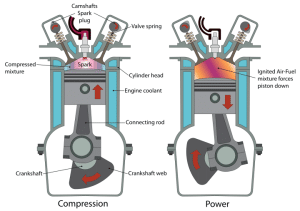
Your engine is a complex assembly of hundreds of components, all synchronised down to the millisecond. At the core of this sits the spark plug, a compact device that generates thousands of sparks every minute to ignite the air and fuel mixture in your engine’s combustion chamber.
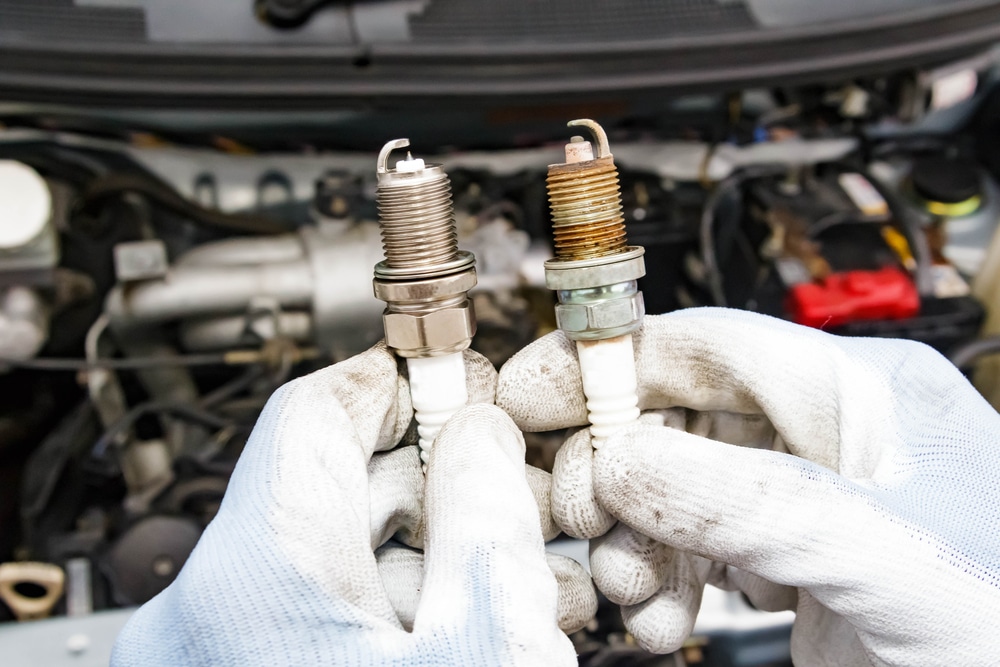
Don’t be fooled by their size. Spark plugs are essential for every petrol engine. They’re threaded into the cylinder head, one per cylinder. A four-cylinder engine has four spark plugs; a six-cylinder engine has six. Some newer engines go a step further with dual-spark technology, using two spark plugs per cylinder.
Here’s a simple way to picture it. The igniter on a gas hob creates a small spark each time you turn the dial to light the gas. Spark plugs do the same thing inside your engine, except they must fire flawlessly thousands of times per minute. If the timing slips by even a fraction, the fuel won’t ignite, your pistons won’t move, and your engine simply stops.
What Makes One Spark Plug Different From Another?
You can’t fit any spark plug to your engine and hope for the best. Your car was engineered for a specific type, and straying from that specification leads to trouble. Here’s what makes one plug different from another:
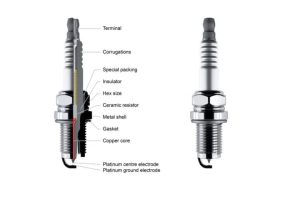
- Electrode Materials: The tip of a spark plug can be copper, platinum, or iridium. Each behaves differently. Copper conducts heat well but wears down sooner. Platinum lasts longer. Iridium commands a higher price but delivers the greatest durability of all three options.
- Heat Range: This is one of the least understood features of spark plugs, yet it’s critically important. Heat range describes how quickly a plug disperses heat from its firing tip. Some shed heat rapidly; others retain it. Get this wrong and the consequences range from sluggish acceleration to severe engine and catalytic converter damage. Always follow manufacturer guidance.
- Design Variations: Spark plugs differ in thread size, reach (how deep the electrode sits inside the combustion chamber), and electrode layout. Every measurement is calculated for a particular engine to ensure correct combustion and effective heat management.
Vehicle manufacturers determine the exact spark plug your engine needs through extensive testing. At RS Autotechnik, we only fit manufacturer-specified, high-quality (OEM[^1]) parts.
Selecting the right spark plug is just the beginning. Installation quality matters equally. A careless fit causes engine trouble, reduced performance, and a bill that could leave you wincing.
Not sure which spark plug type your vehicle requires? Ring RS Autotechnik on 01453 796345 for straightforward guidance.
Know What Wears Your Spark Plugs Out
Several things determine how long your spark plugs will serve you well:
- Fuel Quality & Additives: What you put in your tank has a direct effect on spark plug condition. UK fuel standards are generally solid, but cheaper fuels tend to contain fewer cleaning agents, which allows carbon to accumulate on the electrode and insulator nose over time. Performance vehicles benefit particularly from higher-octane fuel that keeps combustion chambers cleaner. Quality fuel with good additives helps reduce harmful deposits and stretches spark plug life.
- Engine Conditions: Your engine’s general health has a big influence on your spark plugs. Oil creeping past worn valve seals or piston rings into the combustion chamber, an air-fuel mixture that’s running out of balance, or cooling system problems all take their toll. Keeping on top of regular servicing across every engine system gives your spark plugs the best chance of lasting their full lifespan.
- Heat Range: Spark plugs must sit within a precise temperature window. If they run too cool, carbon builds up on the tip. Too hot, and fuel can ignite before the spark fires, a condition called pre-ignition that risks serious internal engine damage. Manufacturers invest considerable effort in specifying the ideal plug for each engine, which is why we never deviate from their guidelines.
- Driving Patterns: Frequent short trips around Dursley or into Gloucester, where the engine never reaches full operating temperature, force it to run fuel-rich. Carbon deposits gradually coat the spark plugs, reducing their effectiveness and causing misfires, rough idling, and rising fuel bills. Fitting in a longer drive now and then, perhaps through the Cotswolds towards Tetbury, helps burn off those deposits and keeps your plugs working well.
Watch for These Spark Plug Warning Signs
Small as they are, failing spark plugs create symptoms you’ll notice behind the wheel:
- Starting Difficulties: If your car is becoming reluctant to start, particularly on cold Gloucestershire mornings, your spark plugs may be struggling to generate a strong enough spark. This tends to worsen gradually until one day, the engine won’t fire up at all.
- Performance Deterioration: Worn spark plugs can change the way your vehicle drives. Acceleration may feel hesitant, with brief power dips or jerkiness, especially when climbing the hills around Dursley and the Cotswolds. Rough idling is another telltale sign. Because failing spark plugs can’t ignite the fuel and air mix efficiently, fuel economy drops too. Leave it unaddressed and repeated misfires risk damaging your catalytic converter, turning a straightforward service into a far more expensive repair.
- Check Engine Light Activation: Modern engine management systems monitor combustion continuously. When spark plugs aren’t performing as they should, the system can trigger the check engine warning light on your dashboard as an early alert.
The frustrating part? These symptoms can look identical to other engine faults, making spark plug issues difficult to pin down without expert diagnosis. If you spot any of these signs, ring RS Autotechnik on 01453 796345 before the problem escalates.
How We Handle Spark Plug Replacement
Replacing spark plugs correctly requires specialist tools, technical expertise, and careful attention to detail at every stage.
We begin by removing the engine cover to access the plugs. Using a spark plug socket tool, we then extract each old plug with care.
Before fitting replacements, we confirm they match the manufacturer’s specifications exactly. We also check the electrode gap with a feeler gauge, because even a fraction of a millimetre out can affect how well the spark plug fires. The area surrounding each cylinder opening is cleaned thoroughly so no dirt or debris can fall inside. Each new plug is threaded in by hand first to eliminate cross-threading risk, then tightened to the precise torque the manufacturer stipulates. Once everything is reassembled, we run the engine and verify that performance is exactly where it should be.
If the job isn’t handled with care, complications follow:
- Incorrect torque settings can cause compression leaks or thread damage
- Seized plugs can snap during removal, needing specialist extraction
- Cross-threading risks expensive cylinder head damage
- Fitting incorrect plugs can lead to engine trouble or catalytic converter damage
- Debris entering the cylinder during installation can cause internal engine damage
Our skilled technicians at RS Autotechnik bring detailed, model-specific experience to every spark plug replacement.
We use manufacturer-approved parts exclusively and calibrate our torque wrenches regularly to guarantee precise installation. Your vehicle leaves our Dursley garage running smoothly and reliably.
Replace Your Spark Plugs Before Trouble Finds You
Delaying spark plug replacement feels like a smart saving until the consequences arrive. The modest cost you avoid today can balloon into something far more painful later, and breakdowns have a habit of striking at the worst moment; halfway down the M5 or crawling through Bristol traffic on a Friday evening.
When Should You Replace Your Spark Plugs?
The interval depends on which type is fitted to your engine:
- Copper-core plugs are the most affordable but wear fastest, so they need changing more frequently
- Iridium-tipped plugs carry the highest price but reward you with the longest service life
- Platinum-tipped plugs fall between the two, offering solid durability at a mid-range cost
Here’s the key detail: you don’t get to choose. Your vehicle’s manufacturer specifies the exact plug type, and going against that recommendation risks poor performance and potential engine damage.
Sticking to the manufacturer’s replacement schedule isn’t a suggestion; it’s essential protection against hefty repair bills. At RS Autotechnik, we follow these guidelines to the letter. The risk simply isn’t worth taking.
Don’t Fall for These Spark Plug Myths
Throughout our years looking after vehicles in Dursley and the wider Gloucestershire area, our team at RS Autotechnik has heard plenty of spark plug misconceptions. Here are the most persistent:
“If one spark plug is bad, only that one needs replacing.”
It sounds like the logical, budget-friendly move, but it nearly always costs more over time. Spark plugs wear at roughly the same rate, so when one gives up, the others are typically close behind. That’s exactly why manufacturers recommend replacing the full set at once. One visit, one job, lower overall cost.
“Modern spark plugs last forever.”
They last longer than older designs, certainly, but no spark plug is eternal. Constant electrical firing, extreme temperatures, and combustion residues all erode the electrode gradually. Even top-tier iridium plugs reach the end of their useful life eventually. Following your manufacturer’s replacement intervals keeps your engine dependable and protects you from unexpected failures.
“Spark plugs only affect starting the engine.”
A surprisingly widespread misunderstanding. Spark plugs work non-stop from the moment your engine starts until you turn it off. They fire hundreds of times per minute throughout every journey, maintaining the smooth, efficient combustion that keeps you moving.
“All spark plugs are the same.”
Not even close. Spark plugs come in distinct types, including copper, platinum, and iridium, each with different heat ranges and electrode designs built for specific engines. Fitting the wrong one can hurt performance, push up fuel consumption, and risk engine damage. Manufacturers match a particular plug to your engine’s compression ratio, combustion chamber design, and operating temperature after thorough testing. There’s nothing generic about it.
Ring Us for Expert Spark Plug Advice
When it comes to spark plugs, catching problems early always beats dealing with the fallout. Too many drivers only discover how important these components are after a breakdown has already happened and the bill is staring them in the face.
At RS Autotechnik, prevention comes first. We provide:
- Specialist tools and experienced technicians for accurate spark plug inspection and replacement
- Guaranteed use of manufacturer-specified or premium OEM parts
- A comprehensive 12-month parts and labour guarantee
- A courtesy car so you’re not left without transport
- Outstanding value with transparent pricing
- A {{average-rating}} star Google rating from {{review-count}} satisfied customers
Our team is dedicated to your vehicle’s reliability, your safety on Gloucestershire’s roads, and your confidence behind the wheel.
Don’t gamble with your engine’s health. Ring RS Autotechnik today on 01453 796345. Our knowledgeable team in Dursley is ready to provide honest, practical advice that keeps your car running at its best.