Mercedes Water Pump Failure
What if the most important component in your Mercedes cooling system was already on its way out, and you had no idea? That’s the uncomfortable truth about the water pump. It works in the background, keeping your engine cool mile after mile, and by the time it fails, you’re already dealing with the consequences: a dashboard warning, a temperature gauge in the red, and steam pouring from under the bonnet.
Mercedes water pump failure is that kind of fault. It rarely gives you the luxury of advance notice, and if the engine has been running hot for any length of time, the damage may already extend well beyond the pump itself.
If your Mercedes diesel engine has started overheating, or you’ve been told the water pump needs attention, this guide covers the fault in detail: what happens, why it happens, which models are most at risk, and what you should do about it. It focuses on Mercedes diesel engines fitted with the OM654 2.0-litre diesel engine from 2016 onwards, where this fault is most commonly reported.
What happens when a Mercedes water pump fails? The water pump keeps coolant moving around your engine in a continuous cycle. When the pump fails, that circulation stops. Engine temperature rises sharply, cooling system warnings light up the dashboard, and internal components begin to overheat. Left unchecked, this can cause serious internal damage, which is why it should be treated as an urgent fault.
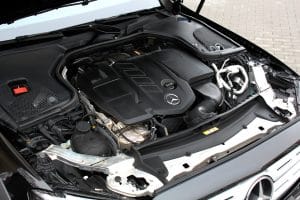
What Your Water Pump Actually Does Inside a Mercedes Diesel Engine
Your engine generates extreme heat during combustion, and the cooling system’s job is to manage it. Coolant passes through the engine block and cylinder head, absorbs that heat, and carries it to the radiator where it dissipates. In Mercedes diesel engines from 2016 onwards, a belt-driven water pump keeps this cycle running continuously, with an electronic thermostat regulating flow to match conditions.
As the pump’s internals degrade, coolant movement weakens. Heat that should be carried away starts accumulating inside the engine instead.
Why Mercedes Water Pumps Fail
This is a recognised fault that builds gradually rather than appearing overnight. Here are the main causes:
- Internal bearing and seal wear: The pump shaft never stops spinning while the engine runs. Over thousands of miles, the bearings supporting it and the seals containing coolant gradually break down. A leaking seal often appears as dampness around the pump housing; worn bearings allow the shaft to wobble, reducing flow.
- Impeller surface deterioration: The impeller blade that drives coolant through the engine corrodes over time, becoming less effective at pushing fluid where it needs to go.
- Coolant contamination: When coolant ages or picks up contaminants, its chemical protection fails. Seals harden, internal surfaces corrode, and the pump’s lifespan contracts.
These factors overlap and compound. Poor coolant condition accelerates bearing and impeller wear, while a failing seal drops system pressure. One fault triggers the next.
That’s why replacing the pump alone isn’t always enough. An experienced Mercedes specialist carries out a thorough technical evaluation to identify the underlying cause and check whether any other cooling system components have been compromised.
How Mercedes Water Pump Failure Shows Itself
Some owners spot the signs over several journeys. Others face a sudden event with no prior indication at all. Here’s what to watch for:
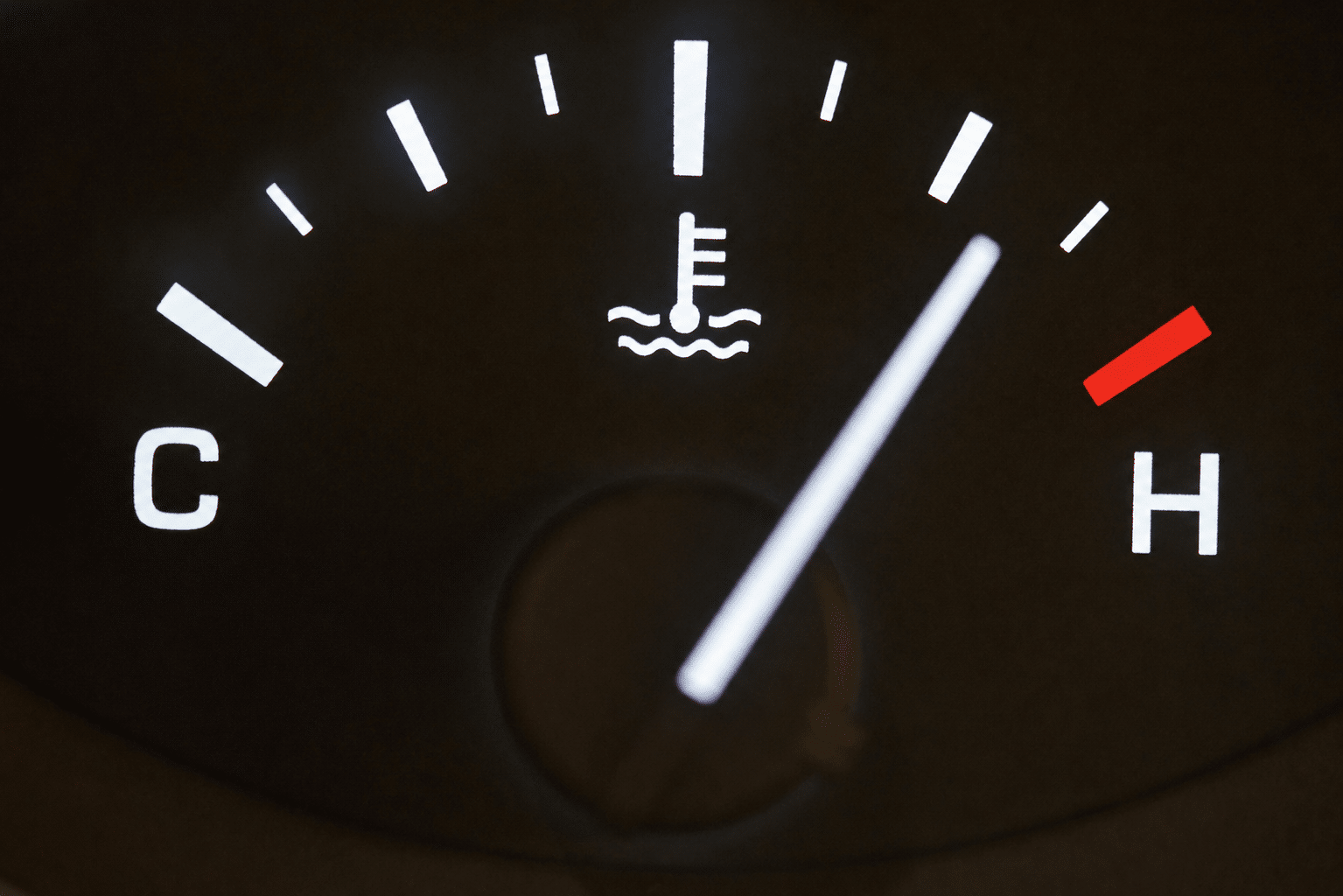
- Temperature gauge creeping upward: Typically the first clue. The needle may rise gradually across drives or spike during a single trip. If you notice it climbing mid-journey, pull over at the earliest safe opportunity.
- Coolant warning light or message: An alert on the dashboard relating to coolant temperature or level. Whether your model sounds an audible tone alongside it varies between vehicles.
- Coolant leak beneath the car: A wet patch or puddle under the vehicle suggests the pump’s seals are deteriorating. Even a small loss of coolant drops system pressure and increases overheating risk.
- Steam or vapour rising from the bonnet area: If coolant has escaped or boiled over from the pressurised system, steam may be visible from the engine bay. This usually means safe operating temperatures have already been exceeded.
- Reduced power or limp mode activation: The engine management system may restrict output to shield internal components from heat damage. If your Mercedes suddenly loses responsiveness, thermal protection could be the reason.
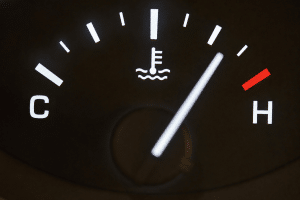
These signs aren’t exclusive to the water pump – other cooling system faults produce similar symptoms. But if Mercedes overheating is the concern, the pump should be high on the investigation list. Call RS Autotechnik on 01453 796345 for guidance.
The Real Risk of Driving with a Failing Water Pump
This is the section most people hope doesn’t apply to them. But it’s the one that could save your engine.
When the pump can no longer circulate coolant, heat builds inside the cylinder head and engine block with no way to dissipate. The longer the engine runs in this condition, the more damage accumulates internally.
The head gasket is typically the first component to give way. Excessive heat causes it to fail, allowing coolant and combustion gases to mix. A repair that was manageable becomes far more complex and expensive. In extreme cases, sustained overheating can warp or crack the cylinder head, among the most serious and costly engine repairs possible.
Want to know the best part?
A Mercedes water pump replacement, carried out before the engine sustains secondary damage, is a repair that an experienced Mercedes specialist completes with confidence. Addressing the fault at the pump stage costs a fraction of what you’d face if the engine overheats to the point of internal failure.
Which Mercedes Diesel Models Are Most Commonly at Risk?
This fault follows the engine, not the individual model. Mercedes water pump failure is tied to a specific engine family fitted across a wide range of vehicles.
The OM654 2.0-litre diesel engine used in Mercedes models from 2016 onwards features a belt-driven water pump. This engine and pump pairing is where the fault is most commonly reported.
The models most frequently affected include:
- Mercedes C-Class diesel (C200d, C220d, C300d) from 2016 onwards, where Mercedes C-Class water pump problems are particularly well known
- Mercedes E-Class diesel (E200d, E220d, E300d) from 2016 onwards
If your model isn’t on this list, it doesn’t mean you’re unaffected. The same 2.0-litre diesel engine also powers the GLC, A-Class, GLA, GLB, and more, each of which can develop the same fault.
If you’ve been wondering “why is my Mercedes overheating?” and you drive any of the models above, RS Autotechnik, Dursley can evaluate your vehicle and give you a definitive answer. The Mercedes C-Class water pump fault may attract the most attention, but every model running this engine carries the same risk.
How RS Autotechnik Investigates and Repairs Water Pump Faults
Multiple cooling system faults can produce identical overheating symptoms. Replacing the wrong component wastes both time and money, which is why we always begin with a structured evaluation rather than assumptions.
At RS Autotechnik, Dursley, the process starts with understanding your experience:
- When did the overheating first present itself?
- Has it occurred once, or is there a pattern developing?
- Was there a dashboard alert, a visible symptom like steam or a leak, or a combination?
This conversation gives our technicians context before they examine the vehicle.
From there, we use specialist knowledge and manufacturer-level software to evaluate the cooling system in detail. That includes reading fault codes, pressure testing for leaks, and assessing pump output. We also inspect associated components – the thermostat, hoses, and radiator – because pump failure can sometimes stem from or contribute to faults elsewhere in the system.
Once we’ve established the cause, we contact you with findings and the recommended course of action. No work begins without your approval.
The repair involves removing the failed pump, fitting a Mercedes-approved replacement, and addressing any related components. The cooling system is drained, refilled, bled, and pressure tested. The engine is then run and monitored to confirm that temperatures hold steady under load.
Regardless of which Mercedes diesel model you drive, a Mercedes water pump replacement is a repair that an experienced specialist handles with confidence. The sooner it’s caught, the better protected your engine is against costly secondary damage.
Why Choose RS Autotechnik for Your Mercedes Water Pump Replacement?
A failed water pump is a problem worth taking seriously, and acting early gives you the best chance of limiting the damage. With an experienced specialist managing Mercedes overheating concerns, the first step is always a thorough evaluation.
If you’ve been asking ‘why is my Mercedes overheating’, RS Autotechnik, Dursley has the answer. Our experienced technicians have the skills and dealer-level software to trace the source of overheating accurately. We carry out a thorough technical evaluation, share our findings with you, and only proceed when you’re satisfied.
Here’s why drivers across Bristol, Tetbury, and Gloucester choose RS Autotechnik for Mercedes water pump repairs:
- Experienced Mercedes technicians with dealer-level software and the correct tooling for precise fault identification.
- 12 months parts and labour guarantee on all repairs carried out.
- Courtesy car available while your Mercedes is being repaired, keeping your schedule on track.
- Clear pricing with a full breakdown before any work begins.
Join the {{review-count}} customers who’ve rated us {{average-rating}} stars on Google for expert repairs and great value.
If you’ve noticed your Mercedes overheating, or something about the cooling system doesn’t seem right, get in touch with RS Autotechnik on 01453 796345 today. The sooner it’s assessed, the less chance there is of the damage spreading.
Frequently Asked Questions About Mercedes Water Pump Failure
How can I tell if my Mercedes water pump is failing?
You might notice a higher-than-usual temperature gauge, coolant warning on the dashboard, coolant beneath the car, steam from the engine bay, or sudden power loss. These symptoms can also be caused by other cooling faults, so it’s always worth having an experienced specialist check your vehicle to confirm the cause.
Is it safe to drive my Mercedes if it’s overheating?
You should pull over and switch off as soon as it’s safe to do so. Continuing to drive with an overheating engine risks more damage and higher repair bills, including head gasket failure and cylinder head warping. Contact RS Autotechnik on 01453 796345 to arrange a technical evaluation straight away.
What does a Mercedes water pump replacement involve?
Removing the faulty pump, fitting a replacement, and addressing related components, followed by a full cooling system drain, refill, bleed, and pressure test.
How much should I expect to pay for a Mercedes water pump replacement?
Costs vary by model and extent of work. We provide a clear breakdown before starting. Early replacement costs far less than addressing prolonged overheating consequences.