Mercedes Timing Chain Rattle
A noise that disappears on its own can feel like nothing to worry about. But in the case of a Mercedes timing chain rattle, the silence that follows is misleading. The engine’s oil system is temporarily compensating for a fault that grows worse every time the engine runs.
The noise itself is distinctive. A sharp metallic clatter as you start the engine, gone within two or three seconds. No warning lights follow it. Nothing about the drive that follows gives any reason for concern. Just that sound, repeating on every cold start, always at the same moment.

What the rattle tells you is that wear inside the timing chain assembly has reached a stage where at least one component isn’t functioning as it should. The tensioner, the guide rails, the chain; each is a candidate. From the driver’s seat, there is no way to determine where the problem lies. The silence that follows each rattle is oil pressure restoring tension, not the fault repairing itself.
The information below applies specifically to the 2.0-litre OM654 diesel engine found in C-Class, E-Class, GLC, and GLE models from around 2016 onwards. RS Autotechnik, Dursley, works on this engine regularly, and timing chain system faults in the OM654 are well documented. If your Mercedes uses a different engine, different factors may apply, but any new noise is worth having assessed.
What causes a Mercedes timing chain to rattle? A Mercedes timing chain rattle is typically caused by wear within the timing chain system. Common causes include tensioner wear, guide rail degradation, and chain elongation. The rattle tends to be most noticeable on cold starts. Because multiple components can be responsible, a thorough technical evaluation is essential to identify the root cause before any repair work begins.
What the Timing Chain Does and Why Precision Matters
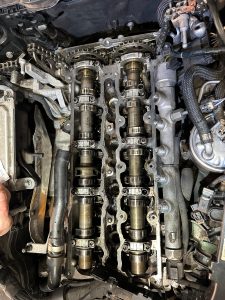
When timing inside the engine shifts even slightly, the consequences multiply. The crankshaft and camshafts must rotate in precise coordination; the crankshaft converting piston force into rotation, the camshafts governing the valves that control airflow through each cylinder.
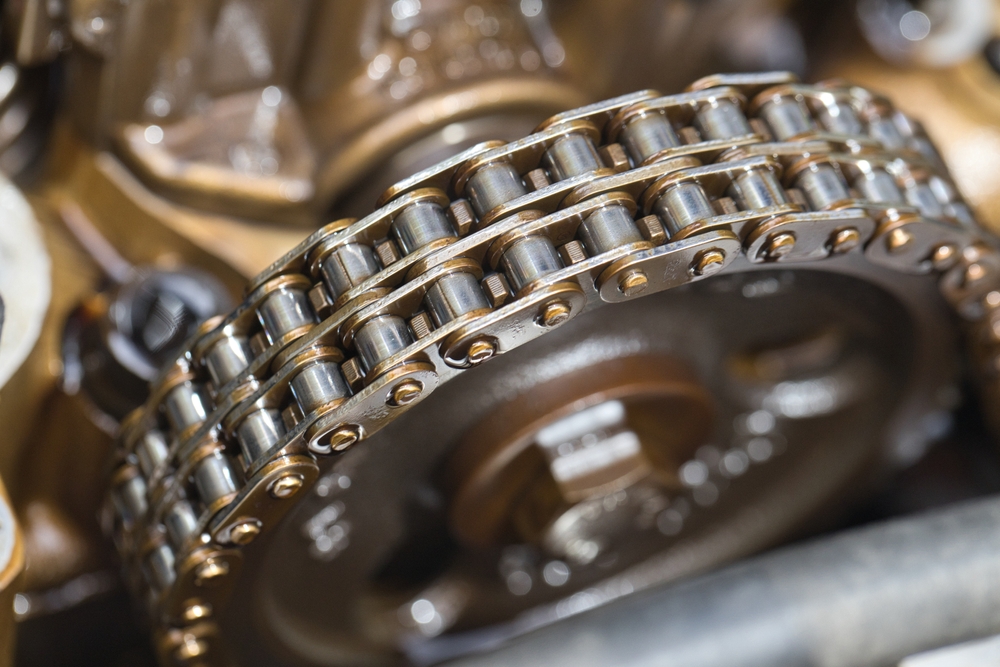
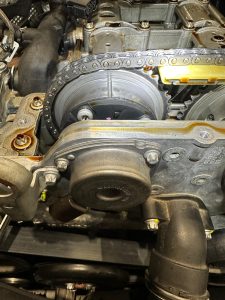
The timing chain connects them. Running internally from the crankshaft to the camshafts, it transfers drive and holds both sides in perfect sync. A hydraulic tensioner, powered by engine oil pressure, prevents slack. Guide rails keep the chain tracking along its designed path. Sprockets on both shafts mesh with the chain links.
When every component functions as intended, the system operates in silence. When wear compromises any part, the chain gains movement it was not designed for, and that movement is what you hear at startup.
The Components That Wear and the Noise They Produce
Identifying the source of the rattle is the starting point, because each component in the timing chain system wears differently and may require a different course of action.
- Tensioner wear. Oil retained inside the tensioner housing keeps the chain under tension between startups. A check valve or sealing surfaces serve this purpose. When those surfaces degrade, oil bleeds out overnight. At the next ignition, the chain runs loose for a few seconds until oil pressure rebuilds and the tensioner reengages. That brief window of slack is what generates the noise, and it accounts for a significant proportion of Mercedes timing chain noise cold start reports.
- Guide rail deterioration. The chain’s path through the engine is maintained by guide rails made of plastic or composite material. Years of heat cycling and high mileage cause them to crack, become thin, or grow brittle. A guide rail that can no longer constrain the chain permits additional movement, which becomes audible.
- Chain elongation. Wear at the pins and bushings inside each chain link increases over tens of thousands of miles. The chain does not stretch; it gains effective length as microscopic clearance develops at every joint. Once the elongation surpasses the tensioner’s compensating range, slack becomes a permanent feature of the system until the chain is replaced.
- Oil quality and pressure. Clean oil at the correct pressure is the foundation on which the entire timing chain system operates. Degraded oil or extended service intervals undermine that foundation, accelerating deterioration across every component at once.
These faults don’t tend to develop in isolation. A tensioner that loses its ability to hold the chain allows increased chain movement, which wears the guides faster. Oil that has lost its protective qualities compounds every fault simultaneously. So what does that mean in practice? A thorough technical evaluation is the only way to map which components have deteriorated and define the scope of the repair.
Hearing a Mercedes timing chain noise cold start each morning? Call RS Autotechnik on 01453 796345 and we can advise on the next step.
How to Identify a Timing Chain Rattle by Ear
Engine startup produces a mix of mechanical sounds, and not all of them indicate a timing chain fault. Knowing what to listen for helps you act at the right time.
A timing chain rattle is characterised by a metallic chattering or rapid tapping from the front of the engine. It is most audible on the first start of the day, following several hours or overnight idle. The sound recedes within seconds as oil pressure builds and the tensioner restores tension.
The character varies. A fine rhythmic tap in some vehicles; a coarser, more resonant metallic sound in others. The difference corresponds to which component has deteriorated and the severity of the wear.
Any metallic noise at startup that was not present before warrants investigation, even if it disappears within seconds. The noise confirms that the timing chain system is no longer maintaining tension within its designed parameters.
Our technicians at RS Autotechnik can distinguish between a timing chain system fault and other cold start noises, ensuring the actual source is correctly identified.
If your Mercedes does not sound right on startup, get in touch with RS Autotechnik, Dursley.
What Is at Risk If the Rattle Goes Unaddressed
Timing chain wear does not stay the same. It gets worse with every engine cycle. A noise that once appeared only at the first cold start of the day begins showing up on warmer restarts, lasting longer, becoming more pronounced.
Now here’s where it becomes critical. Your Mercedes has an interference engine. The valves and pistons share the same physical space at alternating stages of the cycle, kept apart solely by the timing chain. If the chain system allows valve timing to deviate far enough, the valves and pistons collide. Bent valves, damaged pistons, and a bill that can exceed the value of the vehicle are the potential consequences.
The good news? A Mercedes timing chain replacement carried out before secondary damage develops is a well-understood repair for an experienced specialist, and costs a fraction of what a catastrophic failure would.
If you have started hearing that rattle, call RS Autotechnik on 01453 796345 before a contained repair becomes something far more costly.
Which Mercedes Diesel Models Are Most Susceptible?
Mercedes diesel timing chain faults are concentrated in the OM654 2.0-litre diesel engine, which has been fitted across a broad selection of models from around 2016. The tensioner is the component most commonly implicated, though guide rails and the chain itself are also vulnerable. The susceptibility sits with the engine architecture, not the model name.
RS Autotechnik encounters this fault most often in:
- C-Class (C200d, C220d, C300d)
- E-Class (E200d, E220d, E300d, E400d)
- GLC (GLC 200d, GLC 220d, GLC 300d)
- GLE (diesel variants)
Any vehicle fitted with the same engine can develop the same Mercedes diesel timing chain issues, whether or not it appears on this list.
RS Autotechnik, Dursley, can confirm whether your model carries this engine and assess the timing chain system as part of a technical evaluation. We also serve Mercedes owners in Bristol, Tetbury, Gloucester, and the surrounding area.
How RS Autotechnik Traces and Resolves Timing Chain Faults
A timing chain rattle can originate from the tensioner, the guides, the chain, or any combination. At RS Autotechnik, Dursley, every timing chain investigation is built around one principle: identify the full scope of the wear before committing to any repair.
Your account of the noise provides the starting point. When you first noticed it, whether its character has changed, and how long it persists all shape the direction of the assessment before any dismantling takes place.
Our technicians carry out a thorough technical evaluation using manufacturer software alongside hands-on inspection. Each component in the timing chain system is examined in sequence; tensioner condition, guide rail integrity, chain wear, and oil condition are all assessed.
The bottom line? We present the complete findings alongside an itemised quote. No work begins until you have given approval. The repair targets the components that have worn; chain, tensioner, guide rails, and associated parts as needed. After completion, the engine is run-tested and the system verified.
A Mercedes timing chain replacement is a significant piece of work, but well understood by an experienced specialist. Caught before secondary damage develops, it protects the engine from far more serious consequences.
Why Mercedes Owners in Dursley Choose RS Autotechnik
When a timing chain rattle needs answers, RS Autotechnik, Dursley, provides them. We investigate the full timing chain system, explain our findings, and present an itemised quote before any work begins. When you choose RS Autotechnik, you benefit from:
- Dealer-level software and full access to Mercedes technical information.
- A 12-month parts and labour guarantee on all work carried out.
- A courtesy car so you have transport while your Mercedes is with us.
- Competitive pricing with no compromise on quality.
- Serving Dursley, Bristol, Tetbury, Gloucester, and the surrounding area.
Read what our customers say: {{review-count}} Google reviews with a {{average-rating}}-star average.
If you have noticed a cold start rattle, or your Mercedes does not sound the way it should, call RS Autotechnik on 01453 796345 today. The earlier it is assessed, the more contained the repair.
Frequently Asked Questions About Mercedes Timing Chain Rattle
How can I tell if the noise at startup is a timing chain fault?
Listen for a metallic chattering or rapid tapping from the front of the engine in the first seconds after startup. It is most prominent after the engine has been idle overnight. If the noise has started lasting longer or appearing on warmer restarts, the wear may be advancing. A thorough technical evaluation at RS Autotechnik will confirm the source.
What happens if a timing chain rattle is left too long?
Your Mercedes has an interference engine. The valves and pistons share the same space at different stages of the cycle, and if timing chain wear allows valve timing to shift, they can make contact, causing serious internal engine damage. Call RS Autotechnik on 01453 796345 to arrange an assessment.
Is it always necessary to replace the full timing chain system?
Not always. The tensioner, guide rails, and chain are each assessed during a thorough technical evaluation. Only the components that have deteriorated are replaced, so the repair remains targeted and nothing is left unaddressed.
Do you provide transport during the repair?
Yes. RS Autotechnik provides a courtesy car so you have transport while your Mercedes is being worked on.