Mercedes DPF Warning
There’s a component tucked inside the emissions system of every Mercedes diesel that most owners overlook until something goes wrong. It does its job in the background, trapping harmful particles before they reach the air outside. Until the day a warning appears on the dashboard, it stays invisible.
No dramatic change in how the car drives. No new noise from the engine. Just an unfamiliar symbol on the instrument cluster that wasn’t there yesterday, and a question you need answered.
Is it safe to keep driving? How soon does it need attention? The answers depend on what’s actually happening inside the emissions system, which the warning alone won’t tell you.
A warning on your Mercedes diesel, typically the engine management light, means the emissions system has detected a fault that can involve the diesel particulate filter. The cause might be soot loading, an incomplete regeneration, or a separate issue. Left unaddressed, it can lead to reduced performance, limp mode, MOT failure, and repair costs that climb the longer it’s left.

So what does the diesel particulate filter do on your Mercedes? How does regeneration keep it clear? What are the signs worth watching for, and how would RS Autotechnik, Dursley, go about fixing them?
Why Your Mercedes Has a Diesel Particulate Filter
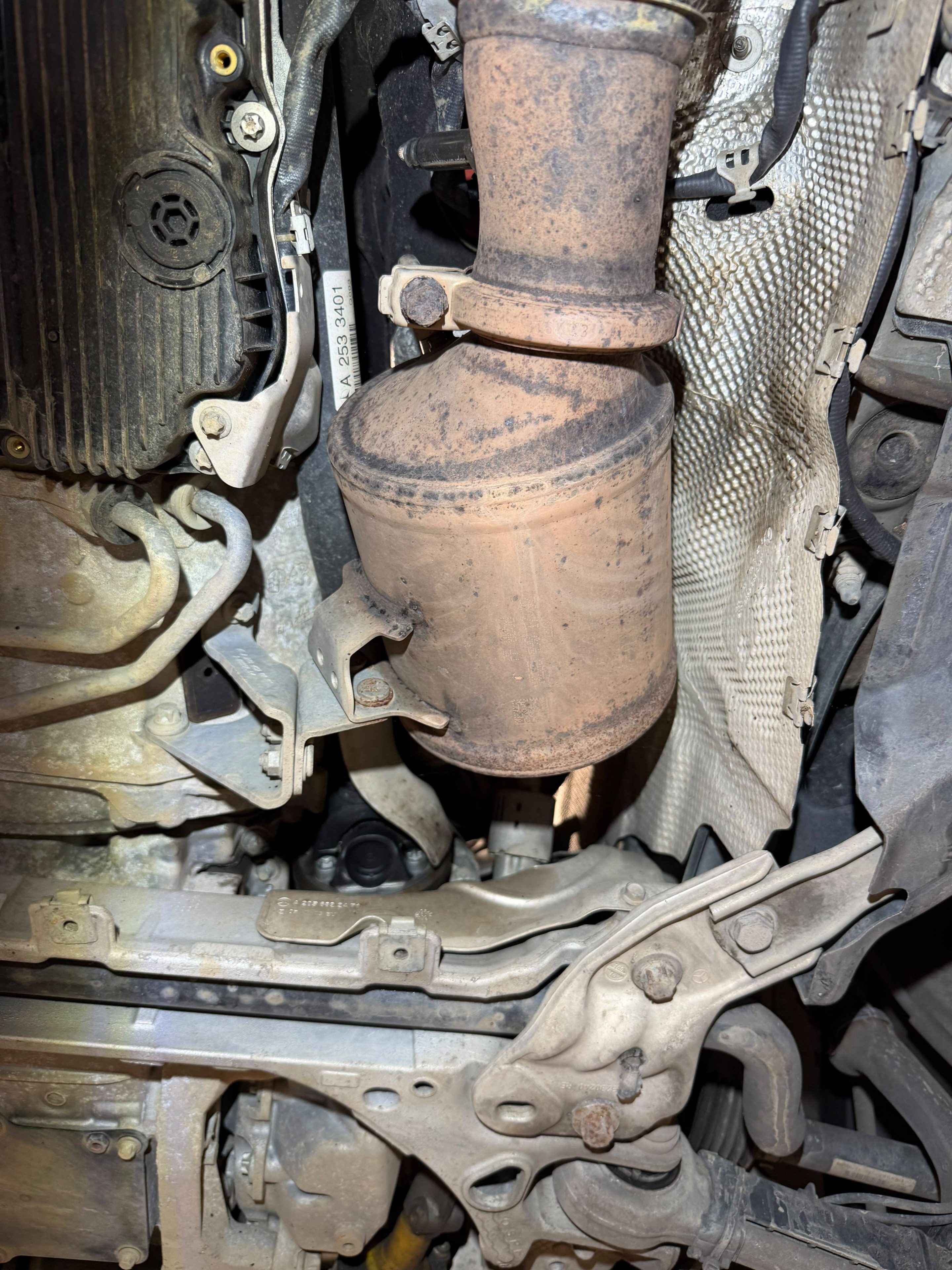
Every Mercedes diesel is fitted with a diesel particulate filter as part of the emissions system. Its purpose is to capture the tiny particles of soot that combustion produces, preventing them from being released into the atmosphere.
As you drive, those soot particles collect inside the filter. That’s a normal part of how the system operates, and the filter is designed to handle it.
So what keeps it from filling up beyond capacity? Your Mercedes has a built-in self-cleaning process called regeneration. When conditions allow, the vehicle raises the exhaust temperature high enough for the collected soot to be oxidised and reduced while you drive. You don’t need to do anything for this to happen.
When that self-cleaning cycle can’t run to completion, the soot keeps accumulating. The filter becomes progressively restricted, and a warning appears on your dashboard.
Mercedes DPF Regeneration: Why It Happens and How It Works
Mercedes DPF regeneration is the process that prevents the diesel particulate filter from becoming overwhelmed with soot over time. Without it, the filter would restrict to the point where exhaust gases could no longer flow as they should.
For the regeneration cycle to run, the engine needs to hold a steady load at a sustained speed for a continuous period, usually once it’s fully up to temperature. The exact conditions vary between Mercedes models and how the car is driven. The engine management system can also step in, raising the exhaust temperature to trigger the process when conditions are close.
None of this requires any input from you. There’s no button to press, no mode to select. Your Mercedes runs the cycle automatically while you drive.
What matters is that Mercedes DPF regeneration isn’t something that happens once. The system needs to complete a full cycle regularly, how often depending on how and where you drive. When it gets that opportunity, the filter stays clear. When it doesn’t, the soot keeps building.
What Prevents Your Mercedes DPF from Staying Clear
The regeneration cycle needs the engine to hold a sustained load at a temperature hot enough for the soot to be oxidised and reduced. When your driving pattern doesn’t provide that window, whether because of short local runs, stop-start commutes, or repeated cold starts without a longer run in between, the filter falls further behind with each trip.
Over time, that deficit builds. What started as a minor soot accumulation becomes a measurable restriction, and the dashboard warning is the system’s way of telling you it can no longer cope on its own.
The reality is that driving patterns are only part of the equation. Something wrong in the engine, the emissions system, or a related sensor can block the regeneration cycle, regardless of the miles you cover, and until that underlying cause is found, the restriction keeps progressing. Telling a driving-pattern issue apart from a mechanical fault is exactly what a professional investigation is for.
If a warning has appeared on your Mercedes dashboard, acting early keeps the cost and complexity down. Ring RS Autotechnik on 01453 796345 and we’ll explain the next steps.
What Lies Behind a Mercedes DPF Warning
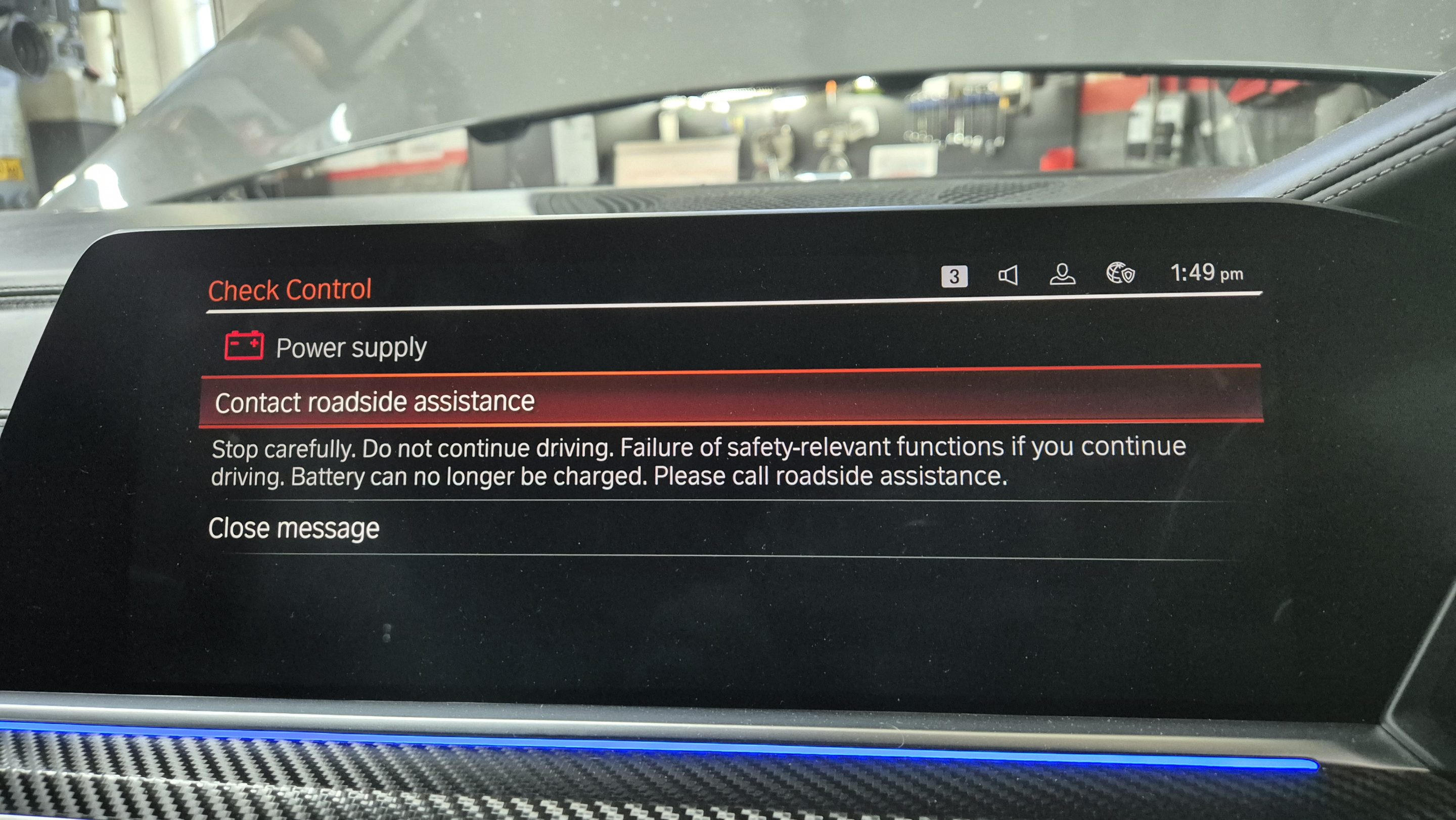
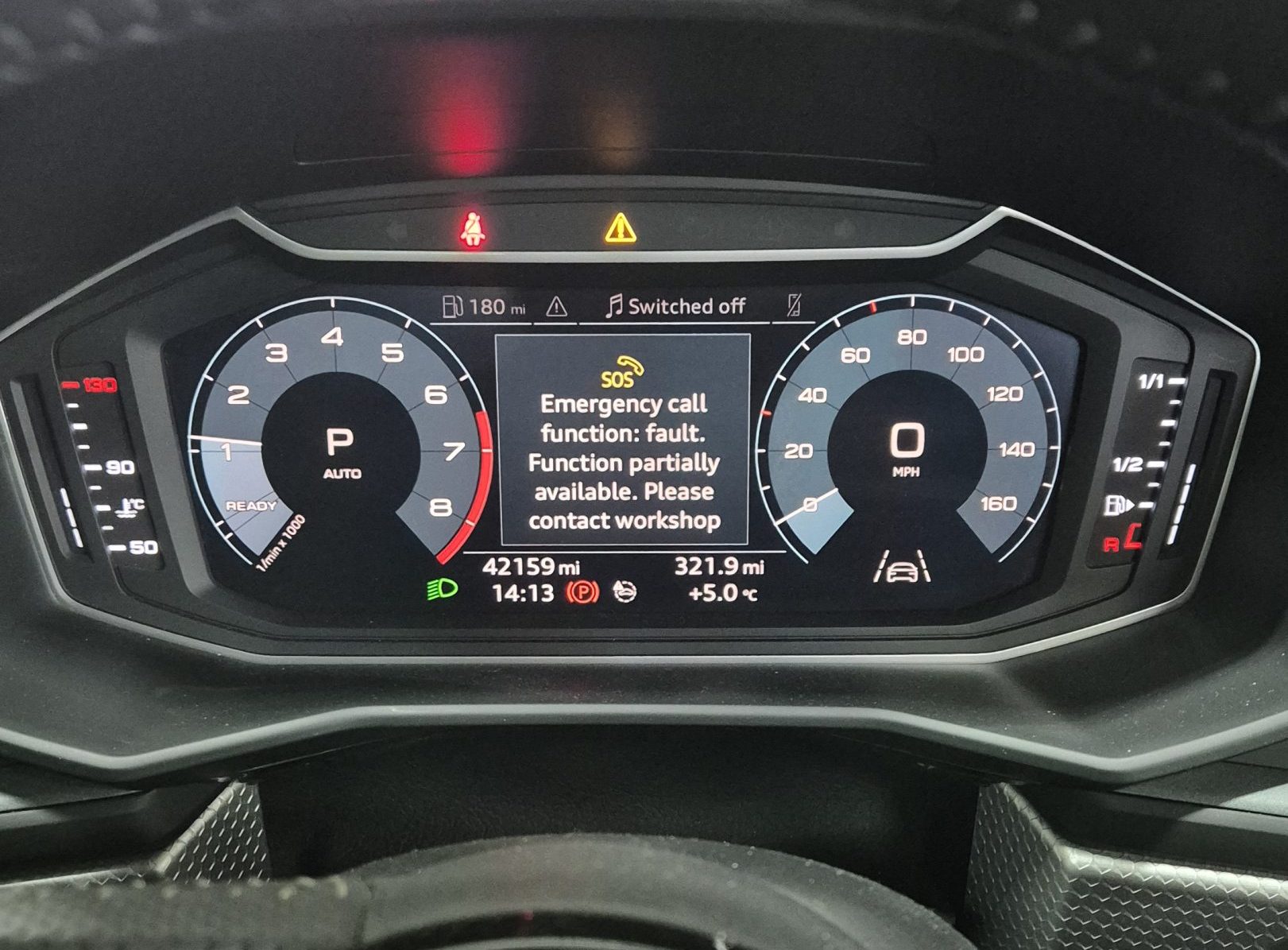
A DPF fault can surface differently depending on the Mercedes: the engine management light, a filter symbol, or a message on the dashboard. Whichever shows, it can’t on its own tell you exactly what’s behind it.
It may come down to a regeneration that simply hasn’t been able to finish. It may be a separate fault stopping the system doing its job. As the two need different remedies, the priority is to establish which, rather than assume.
Go by what the dashboard is telling you, and get the car assessed if the warning stays on or returns. Acting early gives the best chance of tracing the cause while the fix is still a straightforward one.
If a warning is showing and the DPF may be involved, contact RS Autotechnik on 01453 796345. We’ll work out what’s behind it and explain what comes next.
What a Delayed Response to a Mercedes DPF Warning Can Mean
Whether a DPF warning clears on its own depends on how far things have gone. Caught early, a good run that lets a regeneration finish can be enough. Once the restriction has built past a certain point, though, that window narrows, and each additional journey adds to the load, so it isn’t something to count on righting itself.
At first, the changes are easy to miss: a drop in performance, a change in fuel consumption, or the engine running rougher than it should.
If soot levels cross a threshold, the engine management system can switch to limp mode, deliberately restricting power to protect the exhaust components from further harm. With a Mercedes DPF blocked to that stage, holding normal road speeds may no longer be possible.
There’s an MOT dimension too. On any diesel first used on or after 1 July 2008, an illuminated engine management light is a fail in itself. And heavy soot restriction that pushes tailpipe emissions above the pass threshold will fail as well. If the warning has been showing for weeks rather than days, having the system evaluated ahead of your test date avoids an unwelcome surprise.
If you’ve been putting a Mercedes DPF warning off, the sooner it’s looked at, the better. Ring RS Autotechnik on 01453 796345 and we’ll take you through the options.
What Happens When You Bring a Mercedes DPF Fault to RS Autotechnik
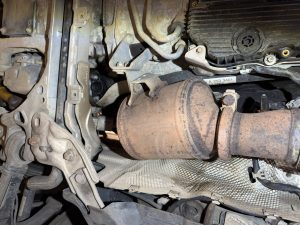
When a DPF fault needs looking into, reading a fault code isn’t enough to explain why the filter has stopped regenerating. That’s why the investigation at RS Autotechnik, Dursley goes further than a surface-level check.
It starts with a conversation. Our technicians ask when the warning first appeared, what you’ve noticed, how the car’s been behaving, and what kind of driving you tend to do. Those details help them build a picture of whether the restriction is linked to driving habits or whether something within the system may be preventing the cycle from completing.
From there, our technicians carry out a thorough technical evaluation using manufacturer-level software. Your Mercedes stores detailed data about the state of the DPF system, including why the self-cleaning cycle hasn’t been able to finish. That data gives us a clear view of what’s happening within the system.
The aim is to identify the root cause, not just to clear a warning and send you on your way. Before we carry out any work, we’ll explain what we’ve found and what it calls for. Every vehicle is different, and the approach is shaped by what the evidence reveals.
What a Thorough Mercedes DPF Warning Investigation Actually Requires
A fault code can flag that something is wrong with your Mercedes DPF, but that’s where it stops. It won’t tell you why the filter isn’t regenerating or what’s blocking the self-cleaning cycle from completing.
So what makes the difference?
Your Mercedes logs detailed system data behind the scenes, the Mercedes-specific readings a generic tool never reaches: DPF-related values, sensor outputs, and operating data. Manufacturer-level software is what opens that up to our technicians. Without it, the investigation stays on the surface.
The data alone isn’t the answer, though. A code that points to excessive soot can have several underlying causes, and it takes a technician with hands-on experience of Mercedes diesel systems to read the figures, work through the possibilities, and reach the right conclusion.
It’s that pairing, the right software and the experience to use it, that separates a thorough investigation from a code-and-clear job. At RS Autotechnik, Dursley, our technicians bring both to every Mercedes DPF fault they look at. If a warning has appeared on your Mercedes dashboard, contact us on 01453 796345 and we’ll take it from there.
Why Choose RS Autotechnik, Dursley for Your Mercedes DPF?
Whether a filter can be recovered or has to be replaced often turns on how the investigation is done. Clear a code without understanding the root cause and the same problem is left sitting there. So a garage taking on a DPF issue needs both the tooling and the know-how.
RS Autotechnik, Dursley, has the manufacturer-level software and the hands-on Mercedes diesel experience to go beyond a basic fault-code reading. A Mercedes C-Class DPF fault, an E-Class restriction, or any other model in the range all receive the same standard of investigation.
When you bring your Mercedes to us, you can expect:
- Full technical evaluation carried out with manufacturer-level software by experienced technicians
- All parts and labour covered by a 12-month guarantee
- Courtesy car provided for the duration of the work
- Serving drivers across Dursley, Bristol, Tetbury, and Gloucester
Rated {{average-rating}} on Google by {{review-count}} Dursley customers; the detail of the investigation and the honesty of the advice are what get mentioned most.
If a DPF warning has appeared on your Mercedes, ring us on 01453 796345. We’ll outline what’s needed and book a full technical evaluation.
Mercedes DPF: Frequently Asked Questions
Which Mercedes diesels see DPF faults most?
It can occur on any diesel Mercedes with a DPF in its emissions system. A Mercedes C-Class DPF fault is one we see at our Dursley garage, and the E-Class and GLC come in with much the same thing, though they’re not the only ones. The filter does the same job across the range, but the system around it, and the way faults surface, can differ from model to model. Whatever you drive, RS Autotechnik can assess it.
Is it safe to keep driving with the warning showing?
That comes down to what the car is telling you. A warning can be triggered by any number of things, so by itself it doesn’t confirm a DPF fault. Do as the dashboard advises, and have the car assessed if the warning won’t clear or keeps returning. If it tells you to stop or seek help, follow that and ring RS Autotechnik on 01453 796345.
What’s involved in a Mercedes DPF regeneration?
It’s the self-cleaning cycle your Mercedes uses to keep soot in check inside the diesel particulate filter. The engine has to hold the right conditions long enough for the exhaust temperature to rise and the trapped soot to oxidise and reduce. If your driving doesn’t give the system that window, soot accumulates and a warning appears.
Can a blocked DPF cause an MOT failure?
It can. For any diesel first used on or after 1 July 2008, an engine management light lit at the test is a fail on its own. And a Mercedes DPF blocked with heavy soot can drive emissions readings past the limits set for the test. If the warning has been showing for a while, it’s worth having it assessed ahead of your MOT. Ring RS Autotechnik on 01453 796345.